

Is it Time for Injury Replacements in Test Cricket?
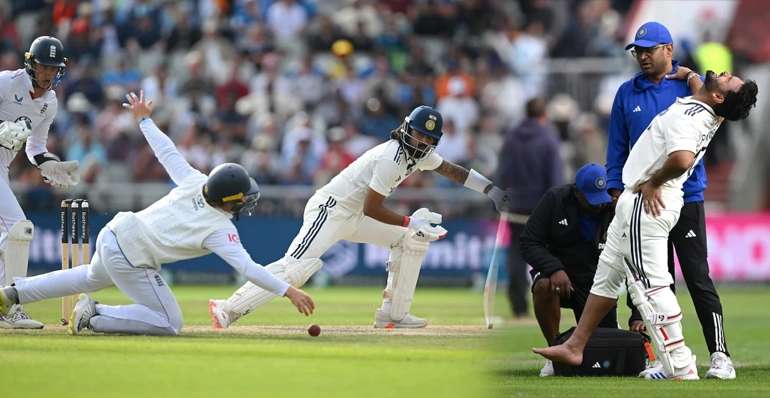
As India battles England in the 2025 Anderson-Tendulkar Trophy, injuries to key players like Rishabh Pant and pacers have sparked debate. Should Test cricket adopt injury substitutions to maintain competitive balance, or does tradition outweigh modern demands. Is it time for injury replacements in test cricket?
Injury Challenges Reshaping Team Dynamics
The fourth Test at Old Trafford highlights the toll injuries take on Test cricket’s grueling format. India’s squad is in disarray, with Nitish Kumar Reddy, Arshdeep Singh, and Akash Deep sidelined, forcing reliance on debutants like Anshul Kamboj. Rishabh Pant’s fractured toe, limiting his mobility, exemplifies the physical demands of five-day matches.
Suggested Topic: Can India win the fourth test against England?
Without substitutions, teams face unfair disadvantages, as India’s depleted bowling unit struggles against England’s aggressive batting, led by Ben Duckett’s 94 and Zak Crawley’s 84. In contrast, sports like rugby and soccer allow injury replacements, ensuring competitive integrity. Test cricket’s refusal to adapt leaves sides like India, down to a four-man attack, vulnerable. Permitting substitutions could allow fresh players, such as Prasidh Krishna, to step in, balancing the contest.
However, purists argue this disrupts Test cricket’s endurance test, where resilience defines greatness. Yet, with modern schedules intensifying, injuries are more frequent, and teams need flexibility to maintain quality. A substitution rule could preserve strategic depth, especially on pace-friendly pitches like Manchester’s, where India’s bowlers faltered, conceding 225/2 by Day 2’s end.
Preserving Tradition vs. Embracing Innovation
Opponents of injury substitutions champion Test cricket’s traditional essence, where overcoming adversity, like Pant’s gritty fifty, showcases the format’s spirit. England’s dominance, fueled by Ben Stokes’ 5-72 and Jofra Archer’s pace, thrives on exploiting weakened opponents, a hallmark of Test strategy. However, modern cricket’s physical demands of faster bowling, longer tours, and packed calendars challenge this stance.
England’s deep batting, extending to No. 10, contrasts with India’s overstretched resources, raising fairness concerns. A substitution system, like limited concussion replacements introduced in 2019, could set a precedent. Allowing one or two injury substitutes per match could ensure competitive balance without diluting Test cricket’s rigor.
Data suggests injuries impact 10-15% of Test players annually, often skewing results. While rain may disrupt Old Trafford’s outcome, India’s fightback hinges on Jasprit Bumrah and Ravindra Jadeja. Embracing substitutions could future-proof Test cricket, aligning it with evolving athletic demands while respecting its heritage.
DOWNLOAD: STUMPSANDBAILS FANTASY CRICKET APP
DOWNLOAD: DRAGOZ SPORTS FANTASY CRICKET APP


